Peptide Dosage Calculator

Enter the vial, diluent, dose, and syringe details to calculate the required syringe marking.

Examples: 0.3, 0.5, 1, or 2 mL
Examples: 30, 50, 100, or 200 units
Amount listed on the vial
Total liquid added to the vial
Enter the dose in micrograms

Your dosage

Draw to —

Enter values
Syringe units
Syringe scaleA visual syringe scale showing the calculated draw amount.—
Required liquid volume—
Final concentration—
Peptide per syringe unit—

Calculation summary

  1. Enter all five values above to see the calculation.
  2. The result will show syringe units, liquid volume, and concentration.
  3. Follow the product or pharmacy instructions for preparation and storage.
Safety note: This tool performs arithmetic only. Confirm the dose, diluent, concentration, syringe type, preparation, and storage with a licensed clinician or pharmacist.

Disclaimer

This calculator is provided for general informational and arithmetic purposes only. It does not provide medical advice, and it does not determine what dose, diluent volume, or preparation method is appropriate for any individual.

Always confirm dosing, reconstitution, storage, and administration with a licensed clinician or pharmacist, and follow the specific instructions provided with your product before use.

PEPTIDE CALCULATOR FAQ & GUIDE

How does the peptide calculator work?

The peptide calculator determines precise syringe draw amounts by calculating the ratio between total peptide mass (mg), reconstitution liquid volume (mL), and your desired target dose (mcg).

What syringe sizes can I use with this calculator?

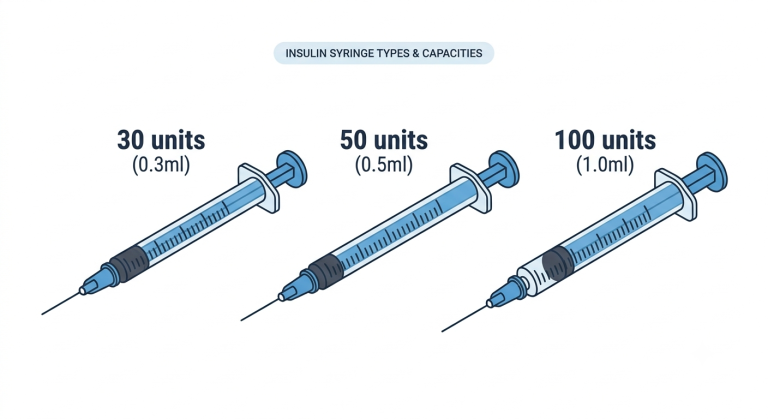
This tool supports standard laboratory insulin syringes, including 0.3 mL (30 units), 0.5 mL (50 units), 1 mL (100 units), and 2 mL (200 units).

What diluent should be used for peptide reconstitution?

Bacteriostatic water (sterile water containing 0.9% benzyl alcohol) is standard for reconstituting research peptides to prevent bacterial growth during multi-dose storage.

Why is accurate reconstitution calculation important?

Precise measurement ensures consistent concentration across pre-clinical research protocols, eliminating unit measurement errors and preserving sample integrity.

How does diluent volume affect syringe unit markings?

Adding more bacteriostatic water increases the total liquid volume without changing the total peptide mass. This dilutes the concentration, requiring a higher unit draw on your syringe to achieve the exact same milligram or microgram research dosage.

How should reconstituted peptides be stored?

Once reconstituted with bacteriostatic water, research peptides should be kept refrigerated between 2°C and 8°C (36°F to 46°F) and shielded from light to maintain sequence stability and minimize degradation.

Peptide calculator syringe unit conversion diagram

Have questions about reconstitution or dosage calculations for your research? Reach out to our expert team via our Contact Us page for support.